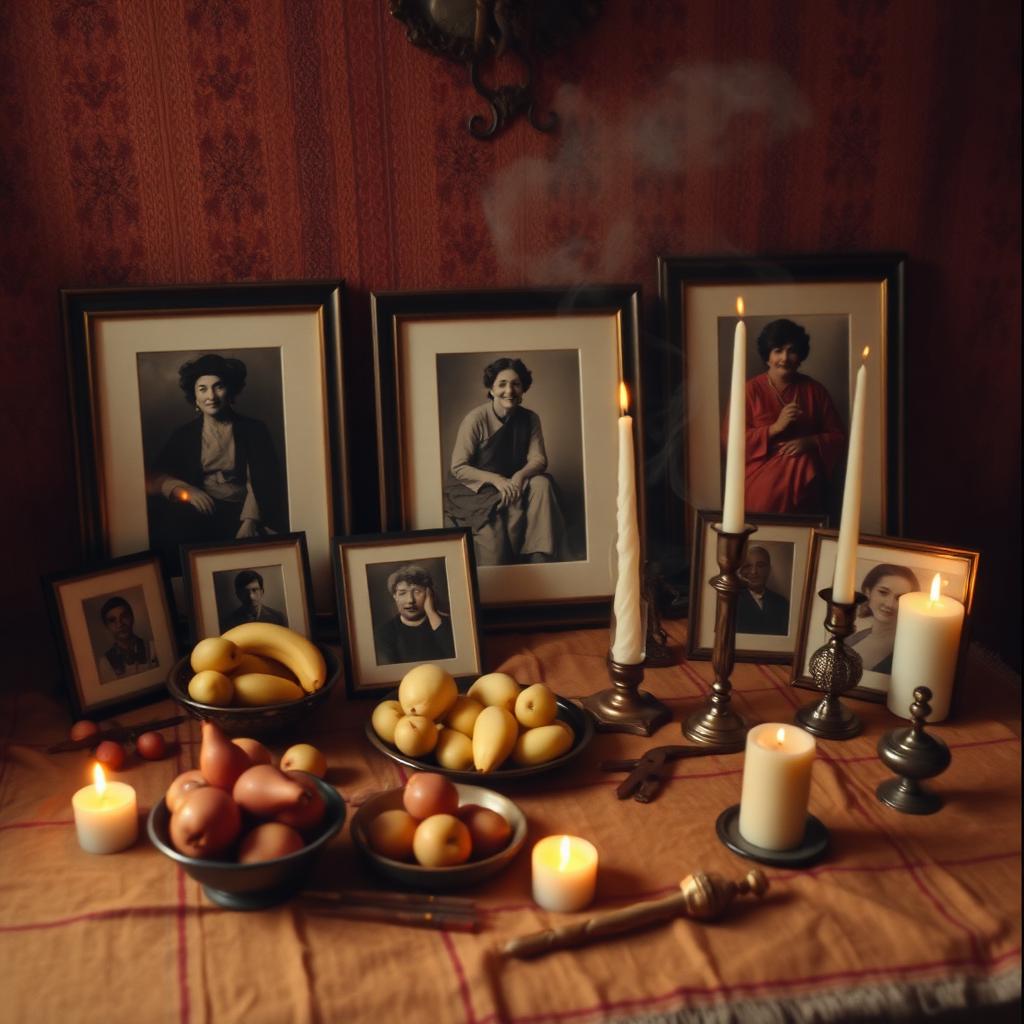
Ancestral Veneration
Building an ongoing relationship with ancestors through altars, offerings, and remembrance across many traditions.
What this experience is like in depth
Who it may help
Overview
What happens during a session
What you physically do
5 to 30 minutes daily or weekly
Rarely covered by insurance. Some sliding-scale options exist, ask.
Questions to ask before booking
- ?Is this rooted in a specific lineage?
- ?Are there living communities I can learn from?
- ?What's appropriate for a beginner outside this tradition?
Possible risks & safety notes
Approach traditions you were not raised in with respect and community consent. Not a substitute for grief therapy when grief is acute.
Talk with a professional first if this applies to you
Some conditions call for extra care before starting this practice. Please review the following and share what applies with your practitioner.
Psychosis or severe mental health history
If you have a personal or family history of psychosis, schizophrenia, bipolar I, dissociative disorders, or are currently in an acute mental health episode, please consult a licensed mental health clinician before this practice. Intense inner experiences can be destabilizing.
Active or severe trauma symptoms
If you are living with active PTSD symptoms, frequent flashbacks, dissociation, or unprocessed severe trauma, work with a trauma-trained licensed clinician first. Intense or immersive experiences can surface difficult material without adequate support.
These are general cautions, not medical advice. Always share your full health history with the practitioner and your regular healthcare provider before starting something new.
Licensing & who to search for
Elder, priest, or tradition-bearer within your lineage (optional)
Try these search terms:
- "ancestral practice teacher"
- "ancestor altar guide"
- "diasporic spiritual community"
Related modalities
Full guide in progress
This entry has the essentials so you can start researching safely. A deeper guide, with history, common myths, FAQs, and further reading, is coming.