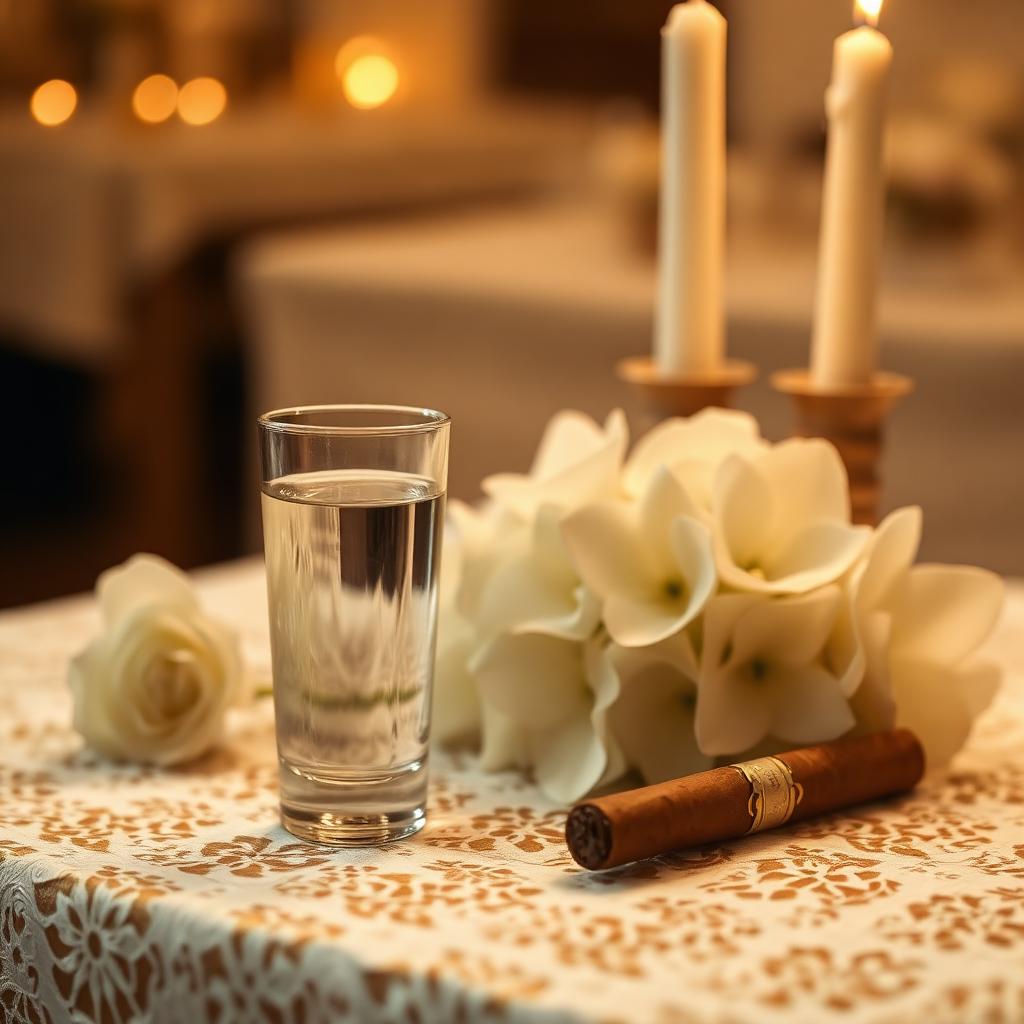
🌊Espiritismo
The Puerto Rican and Caribbean tradition of communicating with spirits for guidance and healing.
Espiritismo is a Caribbean and Latin American spiritual practice rooted in Allan Kardec's 19th-century French Spiritism, blended with African, Indigenous, and Catholic streams. In Puerto Rico, Cuba, and their diasporas, Espiritistas hold misas (spiritual masses) to communicate with ancestors and spirit guides, receive messages, and heal illness understood as spiritual disturbance. It runs alongside Santería and Catholicism in many households.
Lineage: Allan Kardec's French roots; carried and transformed by Caribbean mediums.
Cost depends on practitioner, region, and format.
Estimates only. Many traditions offer sliding-scale, donation, or community access; sacred ceremonies are never for sale.
Distinguishing cultural belief, traditional practice, and evidence-supported effect where applicable.
Emotional
The misa gives grief and hope a form.
Spiritual
Contact with the muertos (ancestors) is understood as ongoing.
Community
Held together with prayer, water, and flowers.
Areas of possible support, not guarantees or medical claims.
- People of Caribbean descent
- Those drawn to mediumship traditions
- Bóveda espiritual (ancestor altar with glasses of water)
- Attending misas espirituales
- Prayer with Kardec's Selected Prayers
- Cleansing baths
What to know before exploring
Cultural and spiritual belief
This entry describes a cultural or spiritual worldview. Any healing effects are held within that worldview and are not framed as clinical outcomes. Approach with curiosity and respect for the culture that carries it.
- Trance, possession, and altered states. Drumming, dance, and possession-based ceremonies can open non-ordinary states that feel profound but may be destabilizing for people with a personal or family history of psychosis, bipolar, dissociation, or acute trauma. Go slowly and honestly, with trustworthy support.
- Cultural appropriation and closed practices. Some elements are closed to outsiders or reserved for initiated practitioners. Participating without invitation, or teaching without lineage, can harm living communities and weaken the practice itself. Approach as a respectful learner, not a consumer.
- Psychosis, bipolar I, or dissociative history (extra pause recommended). If you or a close family member has a history of psychosis, schizophrenia, bipolar I, dissociative disorders, or are in an acute mental health episode, please be extra gentle. Psychedelic, trance, and intense inner-work practices are best avoided unless you are working closely with a psychiatrist who understands this territory.
- Active PTSD or unprocessed severe trauma. Immersive, ceremonial, and altered-state work can surface traumatic memories without warning. If you are living with active PTSD, build a relationship with a trauma-informed licensed clinician first, and choose practitioners trained to hold trauma responses gently.
This information is shared as general education, not medical advice. The safest path is to share your full health story and current medications with both the practitioner and your regular healthcare provider before beginning something new.
Which ancestor would come first if I set a glass of water for them tonight?
What have I labeled coincidence that might have been a message?
Engaging with respect
Learn from a Padrino/Madrina in the tradition; Espiritismo is practiced in specific ritual forms.
Traditions that share needs, practices, or cultural context with this one. Explore with respect for each lineage's origins.
The Afro-Caribbean tradition of Haiti, lwa, community, and drum as a way of living.
- Curated companion
- Shared needs: grief
- Similar practices: ancestor, altar, attending
The Cuban Yoruba-rooted tradition of orisha, prayer, and initiation.
- Curated companion
- Same region (North America)
The Afro-Brazilian tradition rooted in Yoruba, Fon, and Bantu wisdom, orisha, dance, and drum.
- Curated companion
- Similar practices: attending
- Same tradition type
A folk medicine tradition of Mexico and the U.S. Southwest weaving Indigenous, Spanish Catholic, and African healing knowledge.
- Shared needs: grief, anxiety
- Similar practices: cleansing, prayer
- Same region (North America)
Fasting, holy water (tsebel), and prayer of the Ethiopian Tewahedo Church.
- Shared needs: grief, anxiety
- Similar practices: attending, water
- Same tradition type
Ancient Egyptian medicine and spiritual science of Ma'at and the nine bodies.
- Shared needs: grief, anxiety, ancestral connection