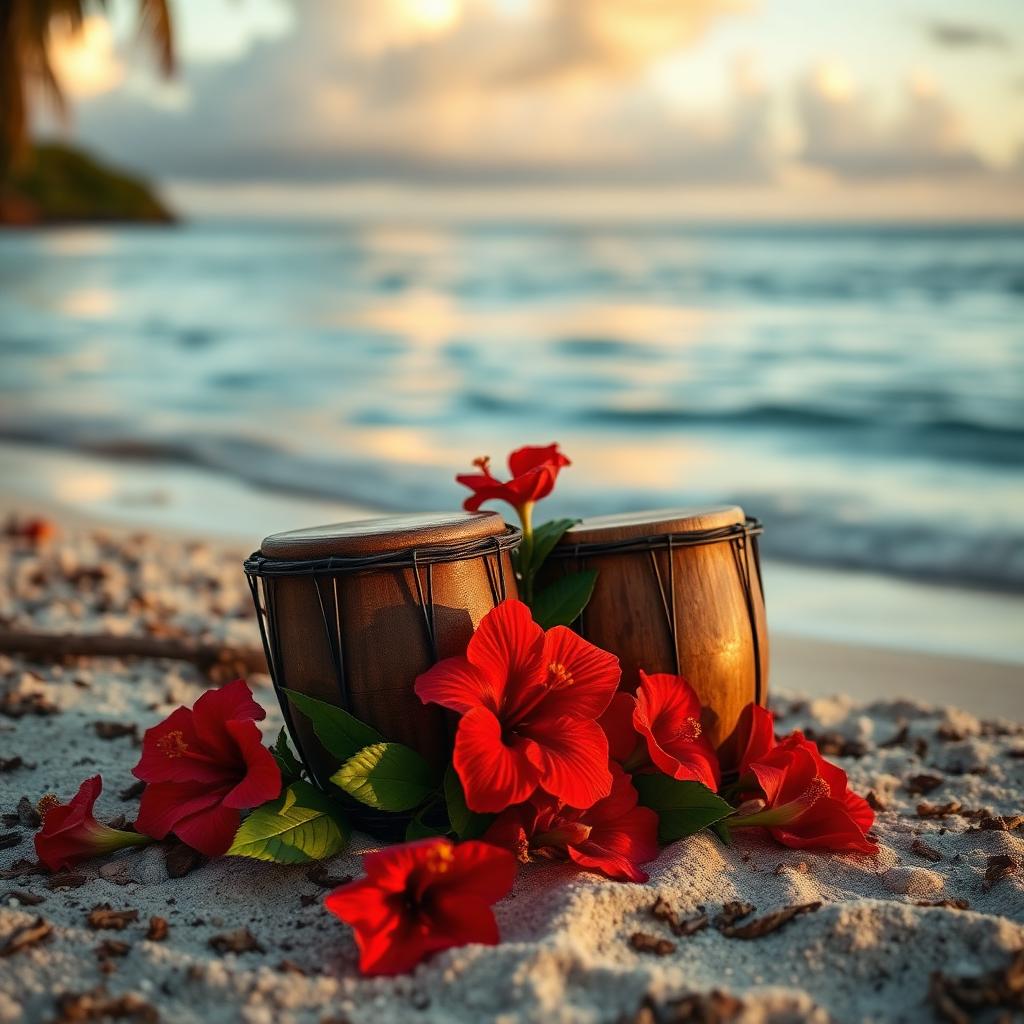
🥁Garifuna Dügü Ceremony
The Central American Garifuna healing rite calling ancestors home through drum and dance.
The Garifuna are descendants of West Africans and Indigenous Caribs, exiled from St. Vincent in 1797 and now living along the Central American Caribbean coast (Belize, Honduras, Guatemala, Nicaragua). The Dügü is their ancestral healing ceremony, lasting days, in which a family calls the ancestors home through drum, dance, offering, and possession. UNESCO recognized Garifuna language, music, and dance as Intangible Cultural Heritage in 2001.
Lineage: Garifuna buyei (spiritual leaders) and family lineages.
Cost depends on practitioner, region, and format.
Estimates only. Many traditions offer sliding-scale, donation, or community access; sacred ceremonies are never for sale.
Distinguishing cultural belief, traditional practice, and evidence-supported effect where applicable.
Spiritual
The ancestors are believed to arrive and speak.
Community
The whole family and community participate.
Nervous system
Days of drum and dance shift the body deeply.
Areas of possible support, not guarantees or medical claims.
- Garifuna families needing collective healing
- Scholars of Afro-Indigenous ceremony
- Ceremony called by a buyei on behalf of a family
- Punta drumming and dance
- Ancestor offerings of food and drink
What to know before exploring
Traditional practice
This is a living tradition carried through lineage and community. Its value is documented through generations of practitioners rather than clinical trials. Absence of Western studies is not absence of wisdom.
- Trance, possession, and altered states. Drumming, dance, and possession-based ceremonies can open non-ordinary states that feel profound but may be destabilizing for people with a personal or family history of psychosis, bipolar, dissociation, or acute trauma. Go slowly and honestly, with trustworthy support.
- Financial and spiritual exploitation risk. Sacred traditions can attract people who charge steep fees or claim exclusive spiritual authority. Trustworthy teachers welcome questions, encourage outside support, and never pressure you to pay for more than you can afford.
- Cultural appropriation and closed practices. Some elements are closed to outsiders or reserved for initiated practitioners. Participating without invitation, or teaching without lineage, can harm living communities and weaken the practice itself. Approach as a respectful learner, not a consumer.
- Psychosis, bipolar I, or dissociative history (extra pause recommended). If you or a close family member has a history of psychosis, schizophrenia, bipolar I, dissociative disorders, or are in an acute mental health episode, please be extra gentle. Psychedelic, trance, and intense inner-work practices are best avoided unless you are working closely with a psychiatrist who understands this territory.
- Active PTSD or unprocessed severe trauma. Immersive, ceremonial, and altered-state work can surface traumatic memories without warning. If you are living with active PTSD, build a relationship with a trauma-informed licensed clinician first, and choose practitioners trained to hold trauma responses gently.
This information is shared as general education, not medical advice. The safest path is to share your full health story and current medications with both the practitioner and your regular healthcare provider before beginning something new.
What would it change to consider illness a call from the ancestors?
Whose exile shaped my family's story?
Engaging with respect
Support Garifuna communities directly; do not appropriate Punta rhythms as background aesthetic.
Traditions that share needs, practices, or cultural context with this one. Explore with respect for each lineage's origins.
The Afro-Caribbean tradition of Haiti, lwa, community, and drum as a way of living.
- Curated companion
- Shared needs: grief
- Similar practices: ancestor, ceremony
A West African tradition weaving ancestral wisdom, herbal medicine, and communal ritual into everyday life.
- Curated companion
- Shared needs: grief
- Similar practices: drumming, offerings
The Cuban Yoruba-rooted tradition of orisha, prayer, and initiation.
- Curated companion
- Similar practices: drumming
- Same region (North America)
Traditional medicine of the Cherokee Nation, plants, prayer, and the Beloved Path.
- Shared needs: grief, illness
- Same region (North America)
The Beauty Way and healing chants of the Diné people of the U.S. Southwest.
- Shared needs: illness, grief
- Same region (North America)
The healing wisdom of the Lakota Nation, sweat lodge, pipe, and the sacred circle of Mitákuye Oyás’iŋ, 'all my relations'.
- Shared needs: grief
- Similar practices: ceremony, dance
- Same region (North America)