
🧘Mindfulness
Present-moment, non-judging awareness, Buddhist in root, now a global evidence-based practice.
Imagery evoking Mindfulness, Present-moment, non-judging awareness, Buddhist in root, now a global evidence-based practice.
Symbolic imagery, generated with respect. No sacred ceremony or living person depicted.
Mindfulness is present-moment, non-judging awareness. Rooted in Buddhist traditions (particularly the Satipatthana Sutta and Vipassana lineages), it was brought into secular healthcare by Jon Kabat-Zinn's Mindfulness-Based Stress Reduction (MBSR) at UMass in 1979. Now supported by hundreds of clinical trials for anxiety, depression, chronic pain, addiction, and workplace stress. Programs like MBSR, MBCT, and MSC are widely offered.
Free guided practices; MBSR courses run $300, $600.
Estimates only. Many traditions offer sliding-scale, donation, or community access; sacred ceremonies are never for sale.
Distinguishing cultural belief, traditional practice, and evidence-supported effect where applicable.
Psychological
Extensive evidence for many conditions.
Spiritual
Roots in Buddhist liberation practice.
Nervous system
Regulates vagal tone with practice.
- Attending an 8-week MBSR or MBCT program
- Daily 20-minute sitting practice
- Body scan before sleep
- Mindful walking during the day
- Reading Jon Kabat-Zinn's Full Catastrophe Living
What to know before exploring
Evidence supported
Elements of this practice have been studied in peer-reviewed research and show measurable benefits for specific concerns. Study quality varies, and the tradition itself is broader than what science has measured. Evidence is one lens; lived lineage and cultural wisdom are equally important.
- Long silent or immersive retreat. Multi-day silent retreats, vision quests, and solo wilderness practices can surface intense emotional material with limited access to support. Rare but documented cases include severe anxiety or depersonalization. Prepare with a therapist, trusted contact, and a clear exit plan.
- Cultural appropriation and closed practices. Some elements are closed to outsiders or reserved for initiated practitioners. Participating without invitation, or teaching without lineage, can harm living communities and weaken the practice itself. Approach as a respectful learner, not a consumer.
- Psychosis, bipolar I, or dissociative history (extra pause recommended). If you or a close family member has a history of psychosis, schizophrenia, bipolar I, dissociative disorders, or are in an acute mental health episode, please be extra gentle. Psychedelic, trance, and intense inner-work practices are best avoided unless you are working closely with a psychiatrist who understands this territory.
- Active PTSD or unprocessed severe trauma. Immersive, ceremonial, and altered-state work can surface traumatic memories without warning. If you are living with active PTSD, build a relationship with a trauma-informed licensed clinician first, and choose practitioners trained to hold trauma responses gently.
This information is shared as general education, not medical advice. The safest path is to share your full health story and current medications with both the practitioner and your regular healthcare provider before beginning something new.
What am I trying to escape by not being present?
What in this moment could hold me if I let it?
Written in the spirit of this tradition, held as invitations, not instructions. Take what serves your reflection.
What am I feeling right now, in this exact moment, without editing it?
What is here, in this breath, that I have been too busy to notice?
Who would I most like to be fully present with this week?
Engaging with respect
Honor the Buddhist roots and the teachers who preserved these practices for millennia.
Traditions that share needs, practices, or cultural context with this one. Explore with respect for each lineage's origins.

Paul Gilbert's approach cultivating self-compassion as an antidote to shame.
- Curated companion
- Shared needs: depression
- Similar practices: practice, reading

The Japanese Buddhist school of direct awakening through zazen (seated meditation).
- Curated companion
- Shared needs: anxiety
- Similar practices: daily, reading
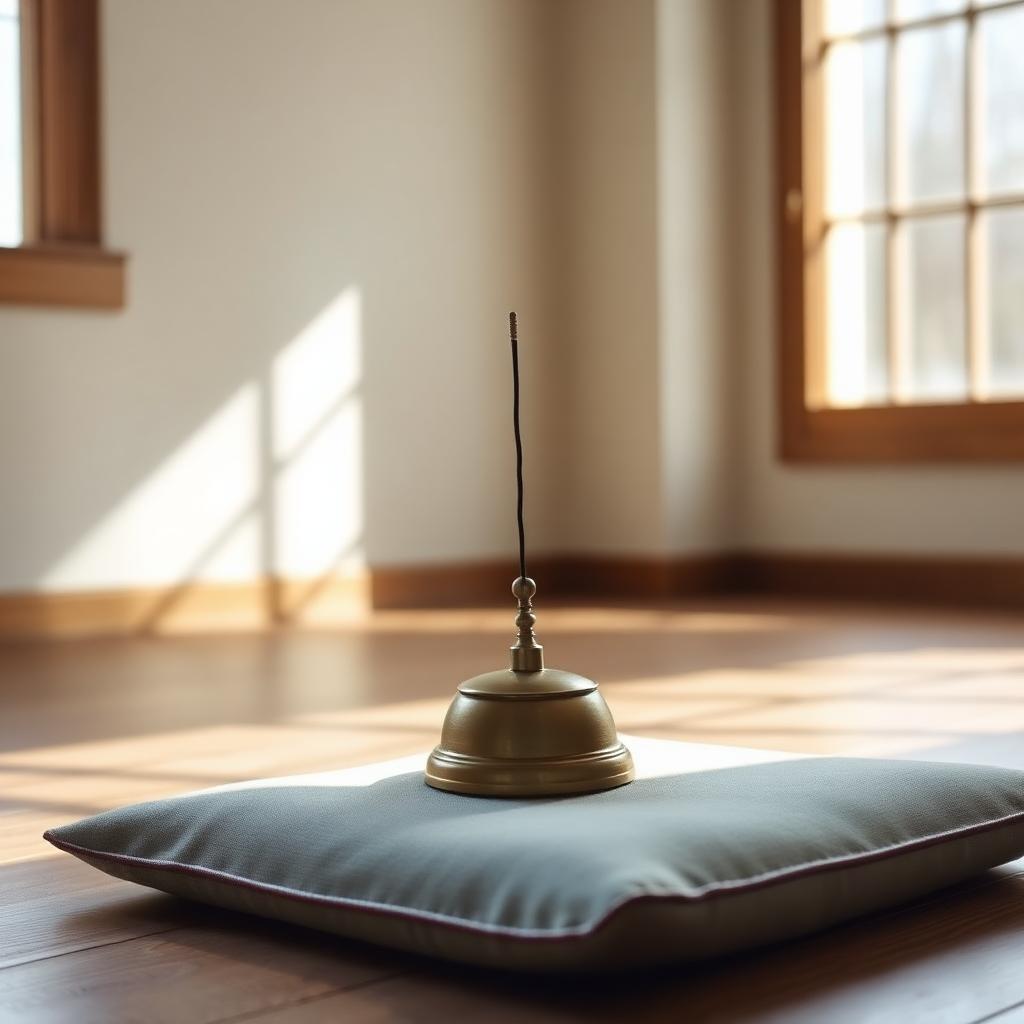
A vast family of contemplative practices held by every major tradition, quieting, opening, seeing.
- Curated companion
- Similar practices: practice, before, daily
- Same region (Global)
A modern behavioral therapy pairing acceptance and mindfulness with values-based action.
- Shared needs: anxiety, depression, chronic pain
- Same region (Global)
The eight-limbed path from India, posture, breath, ethics, and meditation as one whole.
- Shared needs: anxiety, depression, chronic pain
- Similar practices: daily, practice

A model developed by Richard Schwartz that meets the inner 'parts' of the self with curiosity.
- Shared needs: depression, anxiety
- Similar practices: reading
- Same region (Global)