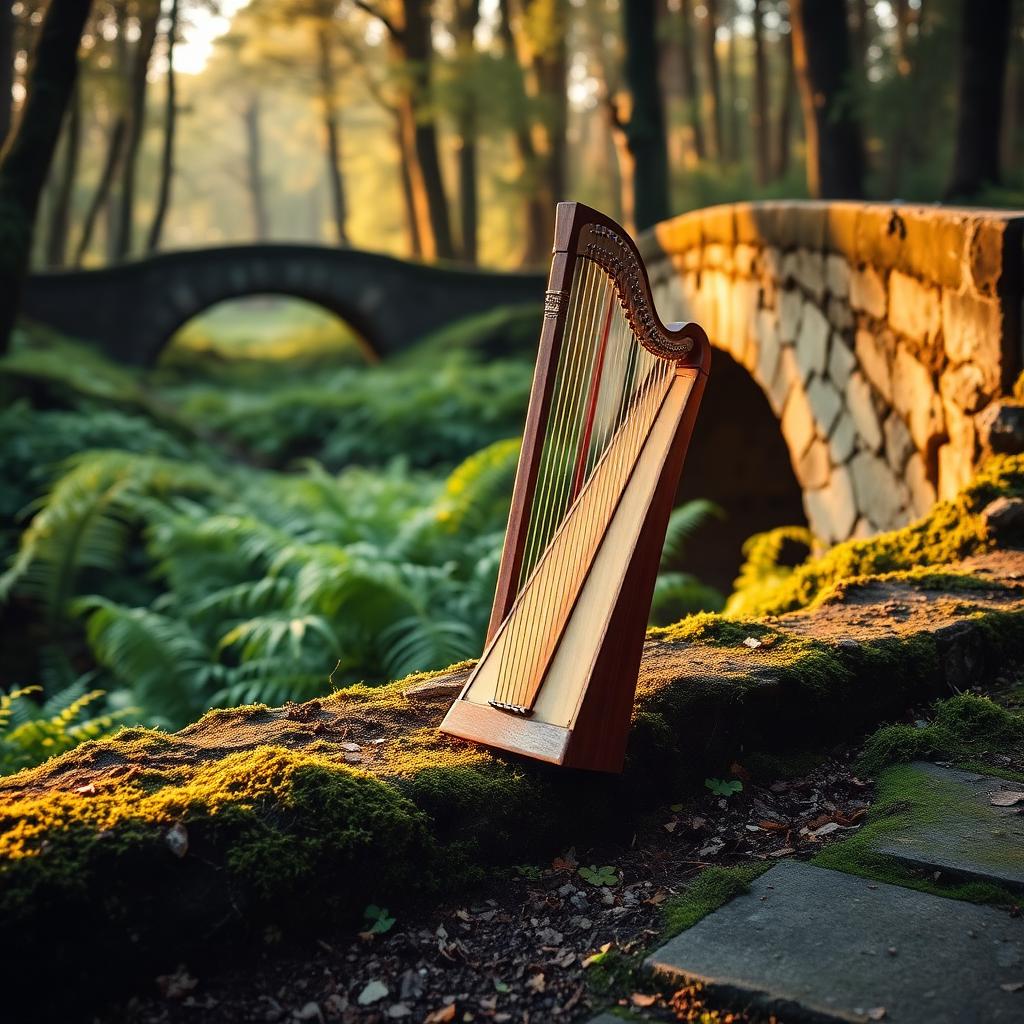
🎼Welsh Bardic Tradition
The poets and memory-keepers of Wales, song and word as medicine for a people.
The Welsh bardic tradition holds one of Europe's oldest continuous poetic lineages, over 1,500 years of Welsh-language poetry with strict metrical forms (cynghanedd) and a living annual competition (the Eisteddfod). Bards were memory-keepers, satirists, and healers of a people through language. To be crowned bard at the National Eisteddfod remains one of Wales's highest cultural honors.
Lineage: Taliesin, Aneirin, and 1,500 years of Welsh-language poets.
Cost depends on practitioner, region, and format.
Estimates only. Many traditions offer sliding-scale, donation, or community access; sacred ceremonies are never for sale.
Distinguishing cultural belief, traditional practice, and evidence-supported effect where applicable.
Psychological
Formal poetic constraint is itself a discipline of attention.
Spiritual
The Awen (poetic inspiration) is understood as a real gift.
Community
The Eisteddfod holds a people around their language.
Areas of possible support, not guarantees or medical claims.
- Welsh people and Welsh-language learners
- Poets drawn to formal traditions
- Learning even a little Welsh (Duolingo, SaySomethingInWelsh)
- Reading Gwyn Thomas or Menna Elfyn in translation and Welsh
- Attending an Eisteddfod
What to know before exploring
Traditional practice
This is a living tradition carried through lineage and community. Its value is documented through generations of practitioners rather than clinical trials. Absence of Western studies is not absence of wisdom.
- Financial and spiritual exploitation risk. Sacred traditions can attract people who charge steep fees or claim exclusive spiritual authority. Trustworthy teachers welcome questions, encourage outside support, and never pressure you to pay for more than you can afford.
- Cultural appropriation and closed practices. Some elements are closed to outsiders or reserved for initiated practitioners. Participating without invitation, or teaching without lineage, can harm living communities and weaken the practice itself. Approach as a respectful learner, not a consumer.
This information is shared as general education, not medical advice. The safest path is to share your full health story and current medications with both the practitioner and your regular healthcare provider before beginning something new.
Which of my inheritances is carried by language I can barely speak?
What poem, in any tongue, holds my grief?
Traditions that share needs, practices, or cultural context with this one. Explore with respect for each lineage's origins.

The learned philosophers, poets, and ritualists of pre-Christian Celtic Europe.
- Curated companion
- Shared needs: grief, meaning
- Similar practices: learning
The Socratic, Aristotelian, and Platonic examination of the good life, Western therapy's grandparent.
- Curated companion
- Shared needs: meaning, grief
- Similar practices: reading

An approach from Michael White and David Epston that separates the person from the problem.
- Curated companion

The living cosmology of Aboriginal Australia, Country, ancestors, and songlines held for 60,000+ years.
- Shared needs: grief, cultural belonging
- Similar practices: learning, attending, reading

Greco-Roman practical philosophy for resilience, virtue, and equanimity, now studied in modern CBT.
- Shared needs: grief, meaning
- Same region (Europe)
The healing gardens, herbals, and rule of life of Christian monastic communities.
- Shared needs: meaning, grief
- Similar practices: reading
- Same region (Europe)