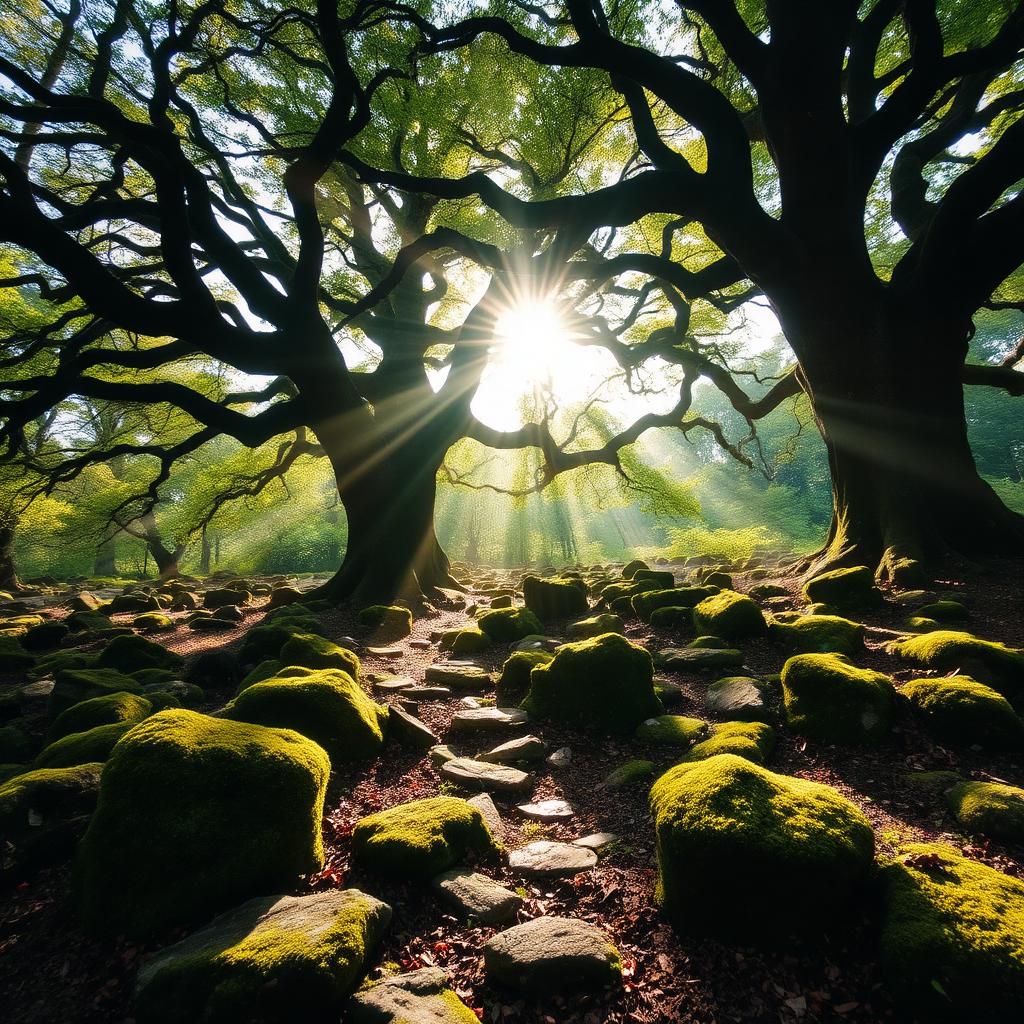
🌳Druid Traditions
The learned philosophers, poets, and ritualists of pre-Christian Celtic Europe.
Imagery evoking Druid Traditions, The learned philosophers, poets, and ritualists of pre-Christian Celtic Europe.
Symbolic imagery, generated with respect. No sacred ceremony or living person depicted.
Druids were the learned class of pre-Christian Celtic Europe (Ireland, Britain, Gaul), functioning as philosophers, poets, judges, ritualists, and healers. Julius Caesar recorded that their training took up to 20 years. Nothing survives in their own hand; what we know comes through Roman writers, Irish and Welsh medieval texts, and the modern druidic revival of the 18th to 21st centuries. Contemporary druidry is a living nature spirituality, not a reconstruction of the ancient priesthood.
Lineage: Iron Age Celtic society; modern revival through John Toland, Ross Nichols, and orders like OBOD.
Grove membership by donation; retreats vary.
Estimates only. Many traditions offer sliding-scale, donation, or community access; sacred ceremonies are never for sale.
Distinguishing cultural belief, traditional practice, and evidence-supported effect where applicable.
Emotional
Ritual holds grief and gratitude in the presence of tree, stone, and star.
Psychological
The eight-fold seasonal wheel gives a year-long rhythm of reflection.
Spiritual
Places the practitioner in relationship with the land, the ancestors, and the gods of place.
Areas of possible support, not guarantees or medical claims.
- People of Celtic heritage reconnecting with pre-Christian roots
- Anyone drawn to nature-based spirituality
- Celebrating the eight seasonal festivals (Samhain, Yule, Imbolc, Ostara, Beltane, Litha, Lughnasadh, Mabon)
- Building relationship with a specific tree, well, or hilltop
- Learning Ogham (the tree alphabet)
- Silent time in wild places
What to know before exploring
Traditional practice
This is a living tradition carried through lineage and community. Its value is documented through generations of practitioners rather than clinical trials. Absence of Western studies is not absence of wisdom.
- Trance, possession, and altered states. Drumming, dance, and possession-based ceremonies can open non-ordinary states that feel profound but may be destabilizing for people with a personal or family history of psychosis, bipolar, dissociation, or acute trauma. Go slowly and honestly, with trustworthy support.
- Financial and spiritual exploitation risk. Sacred traditions can attract people who charge steep fees or claim exclusive spiritual authority. Trustworthy teachers welcome questions, encourage outside support, and never pressure you to pay for more than you can afford.
- Active PTSD or unprocessed severe trauma. Immersive, ceremonial, and altered-state work can surface traumatic memories without warning. If you are living with active PTSD, build a relationship with a trauma-informed licensed clinician first, and choose practitioners trained to hold trauma responses gently.
This information is shared as general education, not medical advice. The safest path is to share your full health story and current medications with both the practitioner and your regular healthcare provider before beginning something new.
Which tree in my region do I know by name and season?
How would my year feel if it turned on eight festivals instead of two?
Written in the spirit of this tradition, held as invitations, not instructions. Take what serves your reflection.
What season of the year matches the season of my inner life right now?
Which tree, stone, or river feels like kin to me?
Who in my life honors the land the way I want to?
Traditions that share needs, practices, or cultural context with this one. Explore with respect for each lineage's origins.
The poets and memory-keepers of Wales, song and word as medicine for a people.
- Curated companion
- Shared needs: meaning, grief
- Similar practices: learning
Scandinavian folk medicine, runic wisdom, and the seasonal severity of the North.
- Curated companion
- Shared needs: ancestral connection
- Same region (Europe)
Therapy that treats the person and the earth as inseparable, healing through nature relationship.
- Curated companion
- Shared needs: meaning
Lithuanian and Latvian nature spirituality, sacred groves, songs (dainas), and seasonal fires.
- Shared needs: meaning, seasonal rhythm
- Similar practices: learning, celebrating, time
- Same region (Europe)
Ancient Egyptian medicine and spiritual science of Ma'at and the nine bodies.
- Shared needs: meaning, grief, ancestral connection
- Same tradition type
A vast family of Indigenous North American healing traditions, each nation with its own sacred practice.
- Shared needs: grief, meaning, ancestral connection
- Similar practices: specific