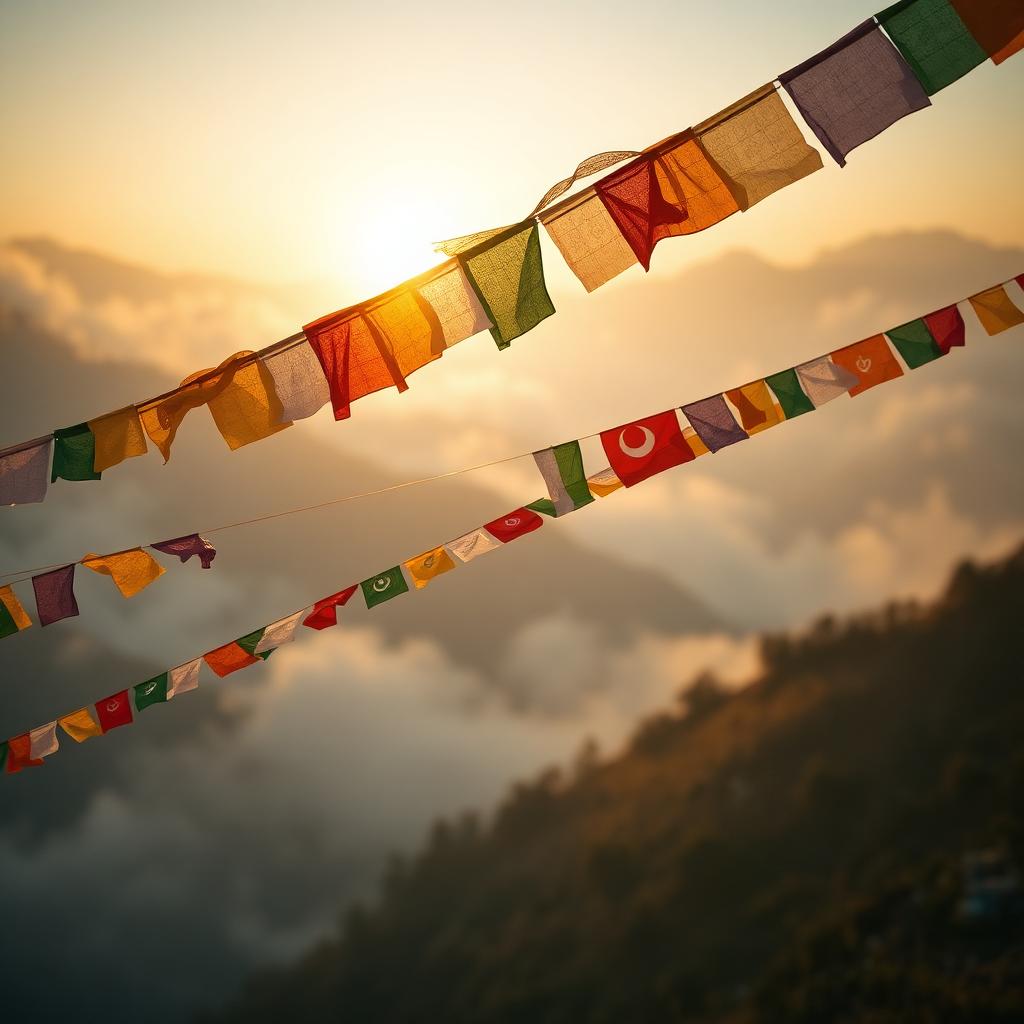
🏔️Gross National Happiness (Bhutan)
Bhutan's Buddhist-rooted framework putting wellbeing, not GDP, at the center of a nation.
Bhutan's Gross National Happiness (GNH) is a national development framework introduced by King Jigme Singye Wangchuck in 1972 as an alternative to GDP. It measures wellbeing across nine domains including psychological wellbeing, health, education, cultural diversity, community vitality, and ecological resilience. Rooted in Bhutan's Vajrayana Buddhist context, GNH has influenced policy conversations worldwide.
Lineage: King Jigme Singye Wangchuck; the Centre for Bhutan Studies and GNH Research.
Cost depends on practitioner, region, and format.
Estimates only. Many traditions offer sliding-scale, donation, or community access; sacred ceremonies are never for sale.
Distinguishing cultural belief, traditional practice, and evidence-supported effect where applicable.
Emotional
Reframes wellbeing as multi-dimensional, so a hard patch in one domain does not mean total failure.
Psychological
The nine-domain frame gives a holistic self-audit beyond mood alone.
Spiritual
Rooted in Vajrayana Buddhist ethics of interdependence and compassion.
Community
GNH is inherently civic; it is a framework for shared, not private, flourishing.
Physical
Includes health and ecological resilience as first-order metrics.
Nervous system
Cultural time use and community vitality are treated as regulators of stress load.
Areas of possible support, not guarantees or medical claims.
- People burned out on GDP-shaped success metrics
- Community leaders, policy designers, and non-profits wanting a broader frame
- Anyone doing a life audit across more than income and calendar
- Studying the nine GNH domains as personal audit
- Bringing GNH thinking to community or organizational decisions
- Learning from Bhutan's constitutional environmental protections
- Rebuilding time-use around the nine domains
What to know before exploring
Traditional practice
This is a living tradition carried through lineage and community. Its value is documented through generations of practitioners rather than clinical trials. Absence of Western studies is not absence of wisdom.
- Cultural appropriation and closed practices. Elements of this tradition may be reserved for initiated practitioners or community members. Approach as a respectful learner, not a consumer, and never present the practice as your own.
This information is shared as general education, not medical advice. The safest path is to share your full health story and current medications with both the practitioner and your regular healthcare provider before beginning something new.
Which of the nine domains is starved in my life?
What would 'gross happiness' look like for my household or team?
Which domain have I let one metric (income, output) crowd out entirely?
Traditions that share needs, practices, or cultural context with this one. Explore with respect for each lineage's origins.
'I am because we are', a Southern African philosophy of communal personhood as healing.
- Curated companion
- Shared needs: meaning
- Similar practices: community

The science of flourishing, strengths, meaning, and what makes life worth living.
- Curated companion
- Shared needs: meaning

Therapy that treats the person and the earth as inseparable, healing through nature relationship.
- Curated companion
- Shared needs: meaning

The mystical stream of Java, meditation, fasting (puasa), and inner refinement.
- Shared needs: meaning
- Similar practices: studying
- Same region (Asia)
The esoteric Levantine tradition of the Druze, contemplation of the soul and unity.
- Shared needs: meaning
- Similar practices: community, studying
- Same tradition type

The Japanese Buddhist school of direct awakening through zazen (seated meditation).
- Shared needs: meaning
- Same region (Asia)